Meta Blocked My Ad Account Before I Ran a Single Ad - And Their AI Bot Didn't Help Either
I'm going to tell you a story that happened before I ran a single ad campaign. Before I spent a dollar. Before I published a creative, wrote copy, or selected an audience.
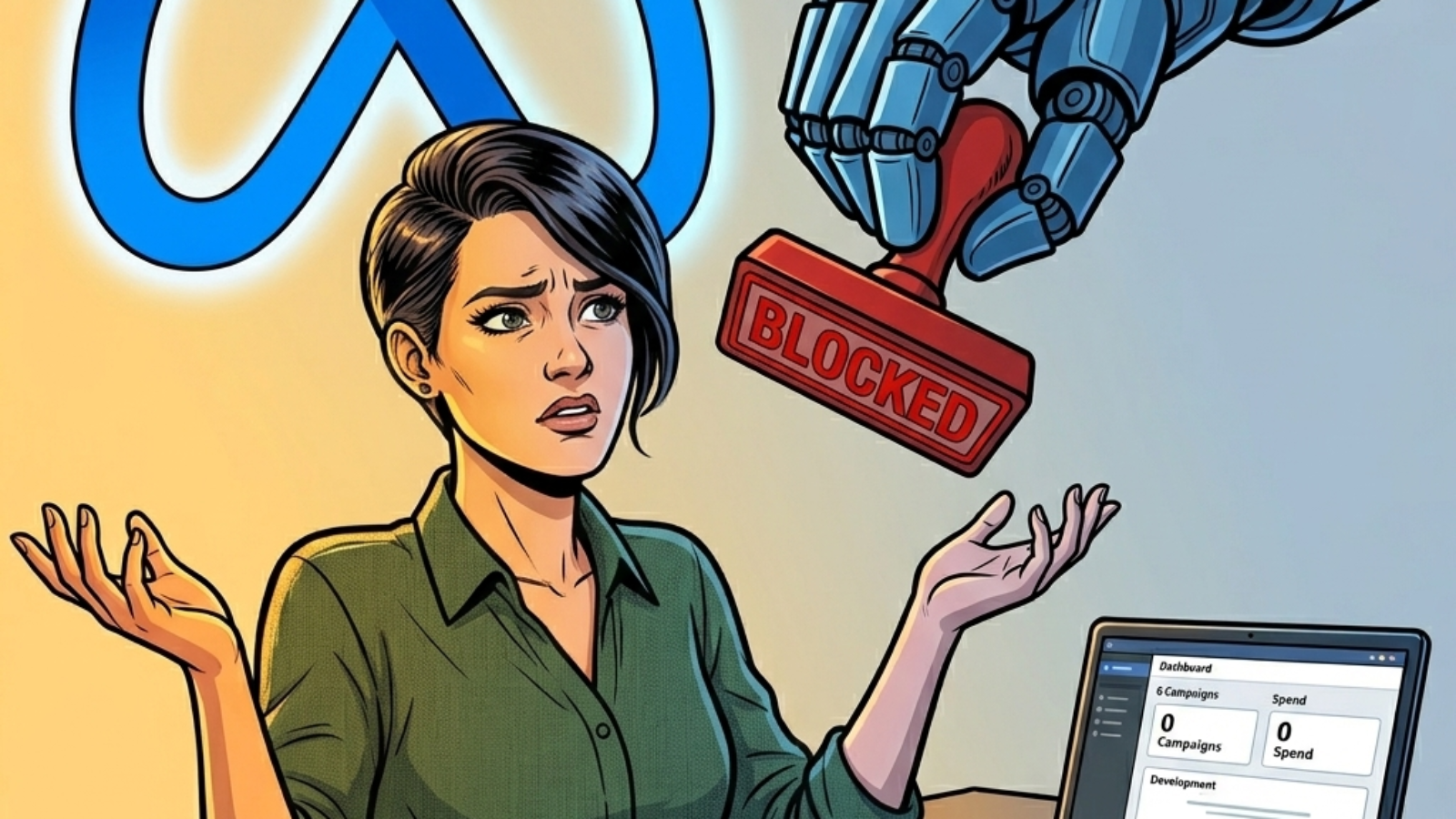
Within 5 minutes of opening a Meta Business ad account, I was restricted. I appealed. My appeal was permanently blocked. No explanation. No human. A template response and a case marked closed.
Here's what makes this story relevant in 2026: I recently tried to resolve it using Meta's new AI support tools. The bot was polite, thorough, and changed absolutely nothing.
What Actually Happened
I build automation systems for B2B companies. My job is to connect CRMs, workflows, and platforms into systems that actually work. When I started thinking about paid advertising, I wanted to understand how Meta's platform was structured before I built anything on top of it.
So I opened an account to explore it. That's all. No campaign. No creative. No spend.
Within 5 minutes, the account was flagged and restricted.
I went through the standard appeal flow. Submitted the form. Waited. Received a template response saying the decision was final and the case was closed. No explanation of what triggered the flag. No description of what policy was violated. No path to a human reviewer.
I own a registered business. I had a legitimate use case. I had done nothing wrong.
It didn't matter.
"A bot flagged me. A bot rejected my appeal. A bot ended my access to their platform. Not because I did anything wrong - because I looked wrong to an algorithm with no accountability and no override."
I'm the Person Who Builds These Systems. The Irony Wasn't Subtle.
Automation is my field. I design the kind of systems that flag, route, and respond without human intervention. And I believe in them - when they're built correctly.
Built correctly means: conditions for escalation to a human, edge case handling, real feedback loops. You design for the majority of cases and you build in a safety valve for the cases your logic didn't anticipate.
Meta's system did none of that. It optimized for catching fraud at scale - and somewhere in that logic, legitimate small businesses became acceptable collateral damage.
There is no efficiency argument that justifies permanently banning a business that never ran an ad. That's not the system working well. That's the system being wrong at scale, and being designed so no one ever has to fix the individual mistakes.
Then 2026 Arrived. Meta Launched Its AI Support Tools.
You may have seen it. Meta rolled out AI-powered support across their Business Suite - a conversational assistant designed to help advertisers navigate issues, policies, and account problems.
I gave it a try. I explained the situation. I asked whether there was any new path to review, any updated process, any way to escalate a permanently blocked account that had never run a campaign.
The AI bot was genuinely impressive in some ways. It understood the context. It explained the policy clearly. It was responsive and professional.
And it told me exactly what the old system told me.
The decision was final. There was no escalation path. The case was closed.
I want to be precise about what happened there. The AI didn't fail because it was poorly built. It failed because it was built on top of the same rules, the same walls, and the same zero accountability that the original system had. Adding a better conversational interface doesn't change the underlying decision. It just makes the wrong answer sound more considered.
When you automate judgment calls without accountability, adding AI doesn't fix the problem. It gives you a smarter way to deliver the same wrong answer.
There Is No Regulation. There Is No Precedent. There Is No Recourse.
This is the part of the story that I think gets missed when people talk about it as a customer service problem.
It's not a customer service problem. It's a structural one.
There is no external regulatory body that requires Meta to justify a permanent ban on a business account that never ran a campaign. There is no defined appeals process with a human at the end of it. There is no legal precedent that gives a small business standing to challenge this kind of automated decision.
Meta doesn't have to explain. They don't have to reverse it. And as of today, their new AI tools - for all their capability - haven't changed any of that. They've made the interface friendlier, but the underlying power dynamic is identical.
A small business with a legitimate use case and a clean record can be permanently excluded from one of the world's largest advertising platforms by an algorithm, with no recourse, no explanation, and no path forward.
That's not a product bug. That's a design choice.
The Lesson I Take Into Every System I Build
When I work with clients on automation, I'm always asking: what happens when this is wrong?
Every automation makes judgment calls. Filtering leads. Flagging accounts. Routing support tickets. Moving deals through stages. At some point, the system will encounter a case it wasn't designed for - and what happens in that moment determines whether the system is actually good.
Good automation is not just fast. It's accurate, and it's honest about where it might not be accurate. It flags edge cases. It routes exceptions to a human. It builds in review paths for high-stakes decisions.
What it doesn't do is permanently close a case with no explanation and no override.
The lesson isn't "don't automate." The lesson is: automate the tasks that can be wrong and recovered from, and build human review into the decisions that can't be undone.
Has This Happened to You?
I'm genuinely asking. Meta's ad account restrictions affect a significant number of small and medium businesses - many of them, like me, before they've done anything at all.
If this has happened to you, I'd like to know: did anyone actually get it resolved? Did Meta's new AI tools change anything for you? Or did you get the same answer I did - just in a friendlier tone?
And if you've built automation systems that handle account flags, appeals, or access decisions - how did you handle the edge cases? What did your escalation path look like?
These are the questions I think we should be asking louder.
Tal Shapiro - CRM Solution Experts
COO background. Builds B2B automation systems - CRMs, ERPs, e-commerce, and calling tools connected into one working whole. Pipedrive Gold Partner. Helping companies worldwide stop losing deals to broken processes.
Building Automation That Doesn't Break Trust
If you're thinking about automating sales, lead management, or account workflows - let's talk about how to do it right.
Book a Free Discovery Call